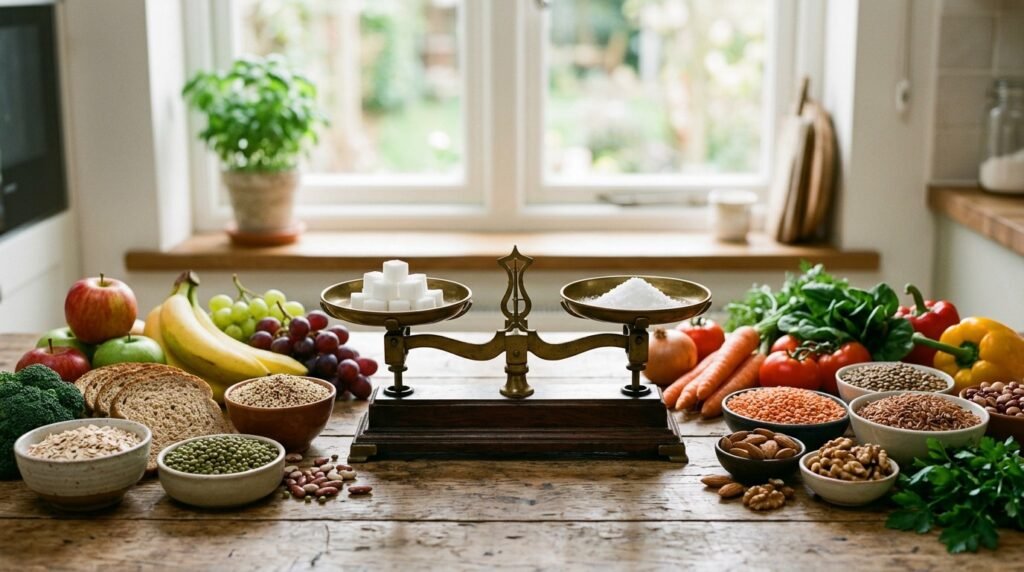
आजकल स्वास्थ्य के प्रति जागरूकता बढ़ने के साथ अनेक लोग चीनी और नमक का सेवन कम करने या पूरी तरह बंद करने का निर्णय लेते हैं। यह अच्छी बात है कि लोग मधुमेह, उच्च रक्तचाप, हृदय रोग और मोटापे से बचने के लिए अपने खान-पान में सुधार करना चाहते हैं।
लेकिन किसी भी पोषक तत्व या खाद्य पदार्थ को बिना वैज्ञानिक जानकारी और व्यक्तिगत स्वास्थ्य परिस्थितियों को समझे पूरी तरह बंद कर देना हमेशा उचित नहीं होता।
स्वास्थ्य का वास्तविक उद्देश्य चीनी और सोडियम को अंधाधुंध बंद करना नहीं, बल्कि उनकी उचित मात्रा और संतुलन बनाए रखना है।
1. चीनी (Sugar): कितनी कम करना उचित है?
चीनी का अत्यधिक सेवन मोटापा, टाइप-2 डायबिटीज, दाँतों की सड़न और अन्य चयापचय संबंधी समस्याओं का जोखिम बढ़ा सकता है।
इसलिए चाय, कॉफी, मिठाइयों, शीतल पेय, पैकेज्ड जूस और अन्य उत्पादों में मिलाई जाने वाली अतिरिक्त चीनी (Added Sugar) को सीमित करना स्वास्थ्य के लिए लाभदायक है।
लेकिन एक महत्वपूर्ण वैज्ञानिक तथ्य समझना आवश्यक है:
शरीर को ऊर्जा के लिए ग्लूकोज की आवश्यकता होती है।
शरीर को ग्लूकोज प्राप्त करने के लिए अलग से सफेद चीनी खाना आवश्यक नहीं है।
साबुत अनाज, दालें, फल और अन्य कार्बोहाइड्रेट युक्त खाद्य पदार्थों से शरीर को ग्लूकोज प्राप्त होता है।
शरीर आवश्यकता पड़ने पर स्वयं भी ग्लूकोज का निर्माण कर सकता है।
इसलिए अतिरिक्त चीनी पूरी तरह छोड़ना सामान्यतः हानिकारक नहीं है। वास्तव में, यह कई लोगों के लिए लाभदायक हो सकता है।
विशेष सावधानी: डायबिटीज के ऐसे मरीज जो इंसुलिन या रक्त में शुगर कम करने वाली कुछ दवाएँ लेते हैं, उन्हें भोजन कम करने या कार्बोहाइड्रेट की मात्रा में बड़ा बदलाव करने पर Hypoglycemia (रक्त में शुगर की कमी) हो सकती है। उन्हें अपने डॉक्टर की सलाह के अनुसार दवाओं और भोजन में बदलाव करना चाहिए।
2. सोडियम (Sodium): इसे पूरी तरह बंद करना उचित नहीं
सोडियम हमारे शरीर के लिए आवश्यक इलेक्ट्रोलाइट है। यह निम्नलिखित कार्यों में महत्वपूर्ण भूमिका निभाता है:
शरीर में पानी का संतुलन बनाए रखना।
नसों के माध्यम से संदेशों का संचार करना।
मांसपेशियों के सामान्य संकुचन में सहायता करना।
रक्त की मात्रा और सामान्य शारीरिक कार्यों को बनाए रखना।
सोडियम की अत्यधिक मात्रा उच्च रक्तचाप, हृदय रोग, स्ट्रोक और किडनी संबंधी समस्याओं का जोखिम बढ़ा सकती है।
लेकिन सोडियम को पूरी तरह समाप्त करने का प्रयास भी उचित नहीं है।
रक्त में सोडियम का स्तर सामान्य से कम हो जाने पर इसे Hyponatremia (हाइपोनेट्रेमिया) कहा जाता है।
इसके संभावित लक्षणों में शामिल हैं:
थकान और अत्यधिक कमजोरी।
सिरदर्द और चक्कर।
मांसपेशियों में ऐंठन।
मतली और उल्टी।
भ्रम और याददाश्त संबंधी समस्याएँ।
गंभीर मामलों में दौरे, बेहोशी और कोमा।
कुछ परिस्थितियों में मस्तिष्क में सूजन और जानलेवा जटिलताएँ।
ध्यान देने योग्य बात यह है कि Hyponatremia केवल भोजन में नमक कम करने से सामान्यतः नहीं होती। शरीर में पानी और सोडियम का असंतुलन, किडनी एवं हृदय संबंधी बीमारियाँ, कुछ दवाएँ तथा हार्मोन संबंधी समस्याएँ इसके महत्वपूर्ण कारण हैं।
3. WHO की नवीनतम सिफारिशें (2026)
विश्व स्वास्थ्य संगठन (WHO) के अनुसार:
सोडियम (Sodium):
वयस्कों के लिए प्रतिदिन 2,000 mg से कम सोडियम लेने की सलाह है।
यह लगभग 5 ग्राम सामान्य नमक के बराबर है।
सभी स्रोतों से प्राप्त सोडियम को इसमें शामिल किया जाता है।
चीनी (Free Sugars):
कुल दैनिक ऊर्जा का 10% से कम हिस्सा Free Sugars से आना चाहिए।
अतिरिक्त स्वास्थ्य लाभ के लिए इसे 5% या उससे कम रखने की सलाह दी जाती है।
2,000 कैलोरी वाले आहार में यह क्रमशः लगभग 50 ग्राम और 25 ग्राम के बराबर है।
यहाँ Free Sugars में भोजन में मिलाई गई चीनी के साथ शहद, सिरप और फलों के रस में मौजूद प्राकृतिक शर्करा भी शामिल है। साबुत फलों में स्वाभाविक रूप से मौजूद शर्करा इस परिभाषा में शामिल नहीं है।
4. 2026 का एक महत्वपूर्ण अंतरराष्ट्रीय विकास
मई 2026 में WHO ने अपने SHAKE Salt Reduction Programme का संशोधित संस्करण जारी किया।
इसमें निम्नलिखित उपायों पर जोर दिया गया:
खाद्य उत्पादों में सोडियम की मात्रा कम करना।
पैकेज्ड खाद्य पदार्थों पर स्पष्ट पोषण लेबल लगाना।
स्कूलों, अस्पतालों और सार्वजनिक संस्थानों में कम सोडियम वाले भोजन को बढ़ावा देना।
उपयुक्त परिस्थितियों में Low-Sodium Salt Substitutes का उपयोग।
लोगों में वैज्ञानिक पोषण संबंधी जागरूकता बढ़ाना।
WHO ने यह भी बताया कि वर्ष 2023 में अत्यधिक सोडियम सेवन से विश्व स्तर पर लगभग 17 लाख मौतें जुड़ी थीं।
5. जनहित में कुछ महत्वपूर्ण सुझाव
अतिरिक्त चीनी और मीठे पेय पदार्थों का सेवन कम करें।
साबुत फल खाएँ; फलों के रस को उनका पूर्ण विकल्प न समझें।
सामान्य नमक का सेवन सीमित रखें, लेकिन बिना चिकित्सकीय कारण के सोडियम को पूरी तरह बंद न करें।
पैकेज्ड खाद्य पदार्थों में Sodium और Added Sugar की मात्रा पढ़ें।
संतुलित आहार में साबुत अनाज, दालें, सब्जियाँ, फल और पर्याप्त प्रोटीन शामिल करें।
डायबिटीज, किडनी और हृदय रोगियों को अपने डॉक्टर या योग्य आहार विशेषज्ञ की सलाह के अनुसार आहार में बदलाव करना चाहिए।
Low-Sodium Salt का उपयोग करने से पहले विशेष रूप से किडनी रोगियों और पोटैशियम बढ़ाने वाली दवाएँ लेने वालों को चिकित्सकीय सलाह लेनी चाहिए।
याद रखें: किसी भी पोषक तत्व की अधिकता और कमी दोनों नुकसानदायक हो सकती हैं। सही मात्रा, संतुलन और वैज्ञानिक जानकारी ही अच्छे स्वास्थ्य की वास्तविक कुंजी है।
UNINFORMED REDUCTION OR COMPLETE ELIMINATION OF SUGAR AND SODIUM CAN ALSO CREATE HEALTH RISKS
Nowadays, growing health awareness is encouraging many people to reduce or completely eliminate sugar and salt from their diets. This is generally motivated by the desire to prevent diabetes, hypertension, cardiovascular diseases, obesity and other lifestyle-related disorders.
Although improving dietary habits is highly desirable, eliminating essential nutrients or making drastic dietary changes without understanding their physiological importance and individual health requirements may sometimes be counterproductive.
The objective of healthy eating should not be the indiscriminate elimination of sugar and sodium, but rather maintaining an appropriate and scientifically balanced intake.
1. Sugar: How much reduction is appropriate?
Excessive consumption of added sugar is associated with:
Obesity and unhealthy weight gain.
Increased risk of Type 2 diabetes.
Dental cavities.
Metabolic disorders.
Increased cardiovascular risk, particularly when associated with an unhealthy overall diet.
However, an important scientific distinction must be understood.
The human body requires glucose as an important source of energy.
Eating refined white sugar is not essential for supplying glucose.
The body obtains glucose from carbohydrate-containing foods such as whole grains, pulses, fruits and vegetables.
The liver can also produce glucose when required.
Therefore, completely avoiding added or refined sugar is generally safe and can be beneficial.
However, people with diabetes who use insulin or certain glucose-lowering medications must be careful. Significant reductions in food intake or carbohydrate consumption may cause hypoglycaemia (dangerously low blood glucose) unless their medication and diet are appropriately adjusted.
2. Sodium: Why is it essential?
Sodium is an essential electrolyte required for several important physiological functions.
It helps:
Maintain fluid balance in the body.
Support normal nerve transmission.
Regulate muscle contractions.
Maintain blood volume and normal cellular functions.
Excessive sodium consumption increases the risk of hypertension, cardiovascular diseases, stroke and kidney-related complications.
However, sodium should not be indiscriminately eliminated from the diet.
An abnormally low concentration of sodium in the blood is known as Hyponatremia.
Possible symptoms include:
Fatigue and generalised weakness.
Headaches and dizziness.
Muscle cramps.
Nausea and vomiting.
Confusion and impaired concentration.
Seizures and unconsciousness in severe cases.
Cerebral oedema and potentially life-threatening complications.
An important clarification: Hyponatremia is not usually caused simply by reducing dietary salt. It is commonly associated with an imbalance between body water and sodium, kidney or heart disorders, certain medications and hormonal disturbances.
3. Latest WHO recommendations – 2026
The World Health Organization recommends the following:
Sodium intake:
Adults should consume less than 2,000 mg of sodium daily.
This is equivalent to less than 5 grams of common salt per day.
Sodium from all dietary sources must be considered.
Free sugar intake:
Free sugars should contribute less than 10% of total daily energy intake.
Reducing this to 5% or less may provide additional health benefits.
For a person consuming approximately 2,000 calories daily, these limits correspond to approximately 50 grams and 25 grams, respectively.
Free sugars include added sugars, honey, syrups and sugars naturally present in fruit juices. Naturally occurring sugars within whole fruits are not included in this definition.
4. An important international development in 2026
In May 2026, WHO released an updated edition of its SHAKE technical package to accelerate global salt-reduction efforts.
The initiative emphasises:
Reducing sodium content in manufactured food products.
Improving nutritional labelling on packaged foods.
Promoting healthier food choices in schools, hospitals and public institutions.
Encouraging lower-sodium salt substitutes in appropriate settings.
Improving public awareness about healthy dietary practices.
WHO also reported that excessive sodium consumption was associated with approximately 1.7 million deaths worldwide in 2023.
5. Important recommendations for everyone
Reduce excessive consumption of added sugar, sweets and sugary beverages.
Prefer whole fruits instead of relying on fruit juices.
Limit excessive salt consumption without unnecessarily eliminating sodium.
Read food labels carefully to check sodium and added-sugar content.
Include whole grains, pulses, vegetables, fruits and adequate protein in your daily diet.
People with diabetes, kidney disorders or cardiovascular diseases should seek individualised dietary advice from qualified healthcare professionals.
People with kidney disease or those taking potassium-raising medications should consult their doctors before using potassium-enriched low-sodium salt.
A message for public health awareness
Good health is not achieved by blindly eliminating individual nutrients or food ingredients. It requires understanding their functions, avoiding excessive consumption and maintaining an appropriate nutritional balance.
Excessive sugar and sodium consumption can be harmful, but uninformed dietary restrictions and inappropriate changes in medication or food intake can also create health problems.
Let us adopt evidence-based nutritional practices rather than following misleading health advice, unverified social media messages or extreme dietary trends.
Eat wisely, maintain nutritional balance, stay physically active and make informed health decisions.
Healthy Life, Happy Life!